Why Pruning Young Trees Shapes Healthier Future Growth
What will the small tree beside your home look like after twenty years of wind, snow, and steady growth?
Its future shape is not decided by chance alone. The way its trunk and branches develop during the early years affects how well it handles weight, weather, and everyday stress later. Thoughtful pruning helps guide that development while cuts are still small and the tree can respond readily.
Table Of Contents
- Young Trees Need Guidance, Not A Drastic Makeover
- Strong Structure Begins With One Clear Framework
- Pruning Directs Energy Without Controlling Nature
- Timing And Technique Matter As Much As Intent
- Common Mistakes Can Follow A Tree For Life
- A Simple Early-Care Plan Builds Lasting Results
- FAQs
We often see young trees left untouched because they appear healthy. Green leaves and quick growth can hide narrow branch unions, competing trunks, or crowded limbs. These concerns become harder to correct once the wood thickens. Early care gives you a chance to guide growth before a minor weakness becomes a large, expensive problem.
Young Trees Need Guidance, Not A Drastic Makeover
Young-tree pruning is best understood as gradual training. We are not trying to force every species into one decorative shape. We are helping each tree build a stable framework suited to its natural form, mature size, and location.
A newly planted tree needs leaves to produce energy and roots to establish. Removing too much live growth can slow that process. For this reason, pruning at planting is usually limited to broken, dead, damaged, or clearly defective branches. More deliberate structural work can begin after the tree has settled into its site.
Small Cuts Protect Future Growth
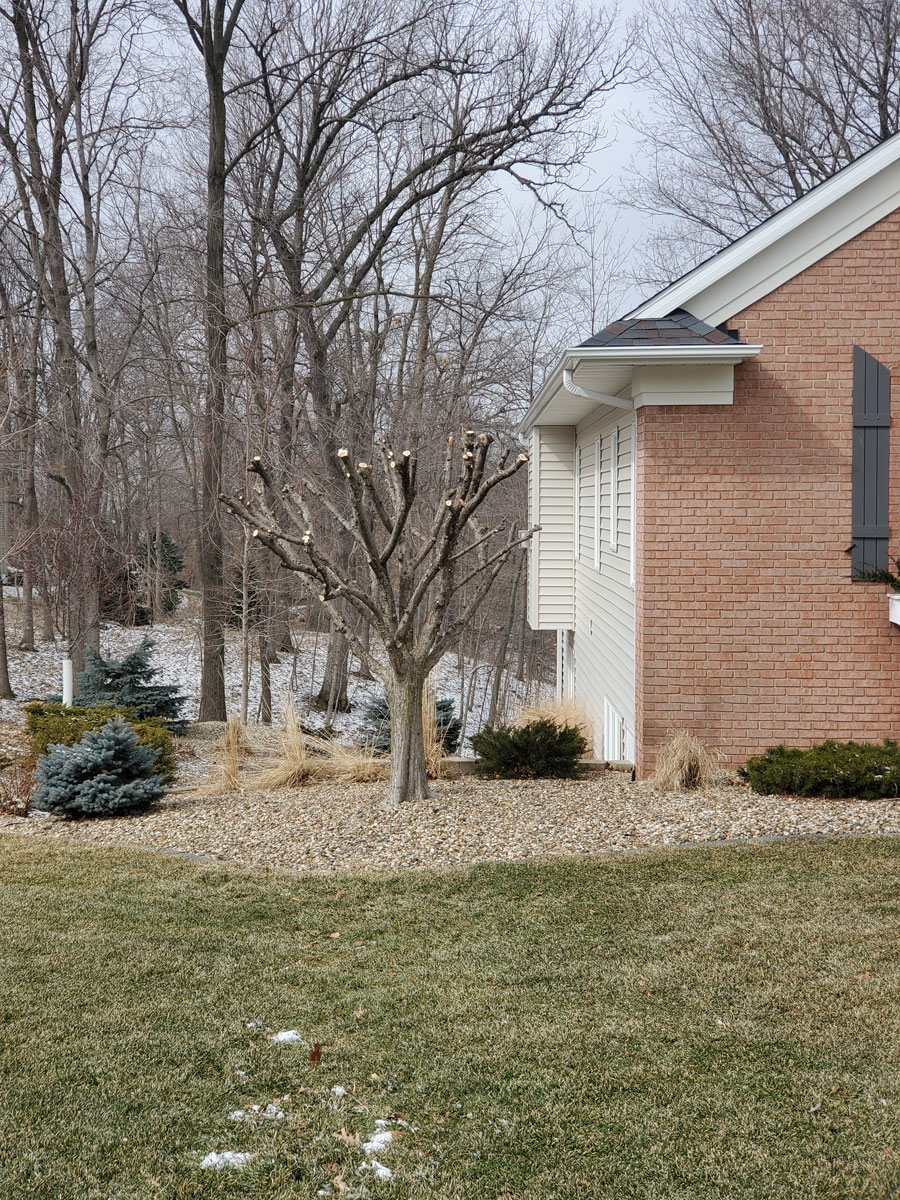
A branch that is thin today may become a heavy limb over a roof, driveway, or walkway. Removing or shortening it early leaves a smaller wound than waiting until maturity. Small cuts are easier for a tree to seal around, although trees do not heal damaged tissue in the same way people do.
Strong Structure Begins With One Clear Framework
For many large shade trees, a strong framework includes one dominant central leader and branches spaced along the trunk. The leader is the upright stem that continues the main trunk. When two stems of similar size compete, their union may be less dependable, particularly if bark becomes trapped between them.
Not every tree should have one trunk. Some ornamental species naturally grow with several stems, while fruit trees may be trained differently. This is why the tree’s identity and intended form must guide every decision. A template cannot replace careful inspection.
Competing Leaders Deserve Early Attention
Two upright stems may look balanced when a tree is small, but both can gain weight and catch wind as they grow. Rather than automatically removing a large stem, we may shorten the less desirable leader over time. This redirects growth toward the chosen leader while preserving enough leaves to support the tree.
Well-Spaced Branches Carry Weight Better
Main branches need room to expand. Several limbs emerging from one small section of trunk can crowd one another and create weak connections. Branches with wider attachment angles generally form stronger unions than tight, V-shaped forks.
Pruning Directs Energy Without Controlling Nature
Every cut changes where growth occurs. Removing a branch eliminates its leaves and buds, while shortening a competing stem can slow it and favor another part of the crown. Used carefully, tree pruning guides energy toward a stable trunk and useful permanent branches.
Low branches are a good example. They may eventually need removal for clearance, yet they can temporarily help the trunk develop thickness and protect it from direct sun. Instead of stripping them away at once, we can keep them small and remove them gradually as the permanent canopy rises.
Timing And Technique Matter As Much As Intent
Many young shade trees can be structurally pruned during dormancy in late winter or early spring. Bare branches are easier to inspect, and the tree is close to its next period of growth. However, correct timing varies by species, condition, local pest concerns, and the reason for pruning.
Dead, broken, or hazardous branches may require attention whenever they are found. Flowering trees may need different timing if preserving blossoms matters. Fruit trees also follow training systems that differ from typical landscape shade trees. When you are unsure, identify the species before reaching for a saw.
A Proper Cut Respects The Branch Collar
The branch collar is the slightly swollen area where a branch joins the trunk or a larger limb. A correct removal cut is made just outside this area. Cutting flush against the trunk damages protective tissue, while leaving a long stub prevents the wound from closing efficiently.
Use clean, sharp tools sized for the branch. Hand pruners suit small stems, loppers provide leverage for somewhat larger growth, and a pruning saw handles branches beyond that range. Never use wound paint as a routine substitute for a sound cut.
Common Mistakes Can Follow A Tree For Life
Poor pruning can create lasting defects because the tree grows around every wound. We encourage you to avoid these common errors.
- Topping cuts off major stems without regard for branch structure and triggers weak, fast-growing shoots.
- Lion tailing removes too many inner branches and leaves foliage concentrated at limb ends.
- Excessive pruning takes away the leaf area a young tree needs for root and trunk development.
- Flush cuts remove the branch collar, while long stubs interfere with natural closure.
- Identical treatment ignores differences among shade, ornamental, evergreen, and fruit trees.
Another mistake is raising the canopy too quickly. Removing all lower branches can produce a thin trunk and place the remaining crown higher than necessary. Clearance should develop in stages, with future use of the space in mind.
Our tree health experts also look beyond the visible crown. A tree planted too deeply, damaged by mowers, restricted by girdling roots, or stressed by poor watering will not be fixed by pruning alone. Good decisions begin with the whole tree and its surroundings.
A Simple Early-Care Plan Builds Lasting Results
Start by inspecting your young tree from several angles. Look for one suitable leader, broken or rubbing branches, narrow unions, crowded limbs, and branches that may conflict with structures as they enlarge. Then decide which concern matters most this season.
Avoid trying to perfect the entire crown in one visit. Light, repeated pruning allows us to see how the tree responds and adjust the next step. Keep useful temporary branches, maintain a balanced crown, and preserve enough foliage for strong growth.
Annual inspection is valuable during the first several years, although cutting may not be needed every year. Storms, rapid shoots, animal damage, and changes around the property can alter priorities. Photos taken from the same position can help you track development without relying on memory.

If branches are large, high, close to utilities, or difficult to assess, professional help is the safer choice. Sure Wood Tree Service helps property owners in Cedar Rapids, Marion, Hiawatha, and nearby communities make measured pruning decisions based on the tree, site, and long-term goal.
Healthy Mature Trees Begin With Thoughtful Choices
Pruning a young tree is an investment in structure, not a race to create a finished shape. A few correct cuts can favor a dependable leader, improve branch spacing, prevent rubbing, and reduce future conflicts. Just as importantly, knowing what to leave preserves the foliage that supports roots and trunk growth.
When we inspect regularly and act gradually, we give trees room to develop carefully without ignoring early warning signs. The result is a crown better prepared for mature weight, local weather, and the space around it. Your tree’s strongest future may begin with one careful decision today.
Frequently Asked Questions
When should a newly planted tree first be pruned?
At planting, remove only dead, broken, damaged, or clearly defective branches in most cases. Begin structural training after the tree has started establishing, then reassess it regularly rather than removing substantial live growth immediately.
How often should a young tree be inspected for pruning?
Inspect a young tree at least once each year and after major storms. An inspection does not always require cutting, but it helps you catch competing leaders, rubbing branches, damage, and developing clearance conflicts while they remain manageable.
Can I prune a young tree during summer?
You can remove dead, broken, or hazardous growth when necessary, but routine timing depends on the species and objective. Many shade trees are easier to assess during dormancy, while certain flowering and fruit trees require different schedules.
How much can I remove from a young tree at once?
Remove only what is needed to meet a clear structural or safety goal. Heavy canopy loss can reduce energy production and slow establishment, so spread major corrections across multiple seasons and seek professional guidance when several defects compete for attention.
Should lower branches be removed from a young tree?
Not all lower branches should be removed immediately. Temporary lower branches can support trunk development, so keep them small and remove them gradually as you establish the final canopy height needed for people, vehicles, buildings, or views.
Shape Stronger, Healthier Trees From the Start
→ Guide young branches toward balanced, resilient growth
→ Prevent weak structure from becoming a costly future problem
→ Protect your trees with careful, properly timed pruning
Connect with Sure Wood Tree Service to give your young trees the right start →
★★★★★ Rated 4.9/5 by 91+ Satisfied Clients
Related Articles: