Why Do So Many Tree Trimming Myths Still Fool Homeowners Today?
Have you ever held off on trimming a branch because a neighbor insisted it would kill the tree? You are not alone. Homeowners in Cedar Rapids and Marion, Iowa, often hear tree care advice that sounds reasonable but is not always accurate. Tree trimming myths have circulated for generations, passed down at backyard gatherings and repeated on social media until they seem like established facts. The problem is that following bad advice can harm your trees, waste money, or leave a hazardous branch hanging over your roof. Sure Wood Tree Service was founded in 2020 to help local homeowners, and part of that commitment means clearing up confusion so you can make informed decisions about the trees on your property.
In this guide, we will examine common tree trimming myths, explain what reliable tree care guidance recommends, and share practical tips you can use to protect your trees. By the end, you will have a better understanding of when trimming is appropriate, which practices to avoid, and how to recognize trustworthy advice.
In This Post
- Myth: Trimming Anytime Hurts the Tree
- Myth: Topping Makes Trees Safer and Smaller
- Myth: Wound Sealer Speeds Up Healing
- Myth: More Trimming Equals More Growth
- How to Spot Good Advice and Avoid Bad Cuts
Myth: Trimming Anytime Hurts the Tree
One common warning homeowners hear is that trees should never be trimmed outside late winter. Some people worry that cutting branches in summer or fall will shock a tree or expose it to disease. The reality is more nuanced. While timing matters, there is no single pruning schedule that applies to every tree and situation.
Dead, broken, or hazardous branches may need attention regardless of the season. For example, waiting until winter to address a cracked limb hanging over your driveway could leave your family and property exposed to an unnecessary risk. Prompt assessment is especially important after storms or when branches threaten structures, walkways, or other frequently used areas.
For many deciduous trees in Iowa, late winter is generally the preferred time for routine pruning. Trees are dormant, their branches are easier to inspect without foliage, and the cuts can begin closing as spring growth starts. However, pruning at other times of the year can be appropriate, depending on the tree species, its condition, and the reason for the work.
Oaks require particular care because of oak wilt, a serious fungal disease that can spread when sap-feeding beetles carry the pathogen to fresh wounds. The Iowa Department of Natural Resources recommends avoiding oak pruning during the growing season and generally waiting until after October 15 to begin pruning. Winter is an especially suitable time for this work in Iowa. If an oak must be pruned during the growing season because of storm damage or another urgent concern, a qualified professional can advise on the appropriate precautions.
The takeaway is simple: pruning decisions should account for the tree species, its health, the weather, and the risks involved. A blanket rule such as “never trim in summer” oversimplifies the issue. If you are unsure what your trees need, consult a local professional who provides tree pruning services and understands the conditions in Cedar Rapids and Marion.
Myth: Topping Makes Trees Safer and Smaller
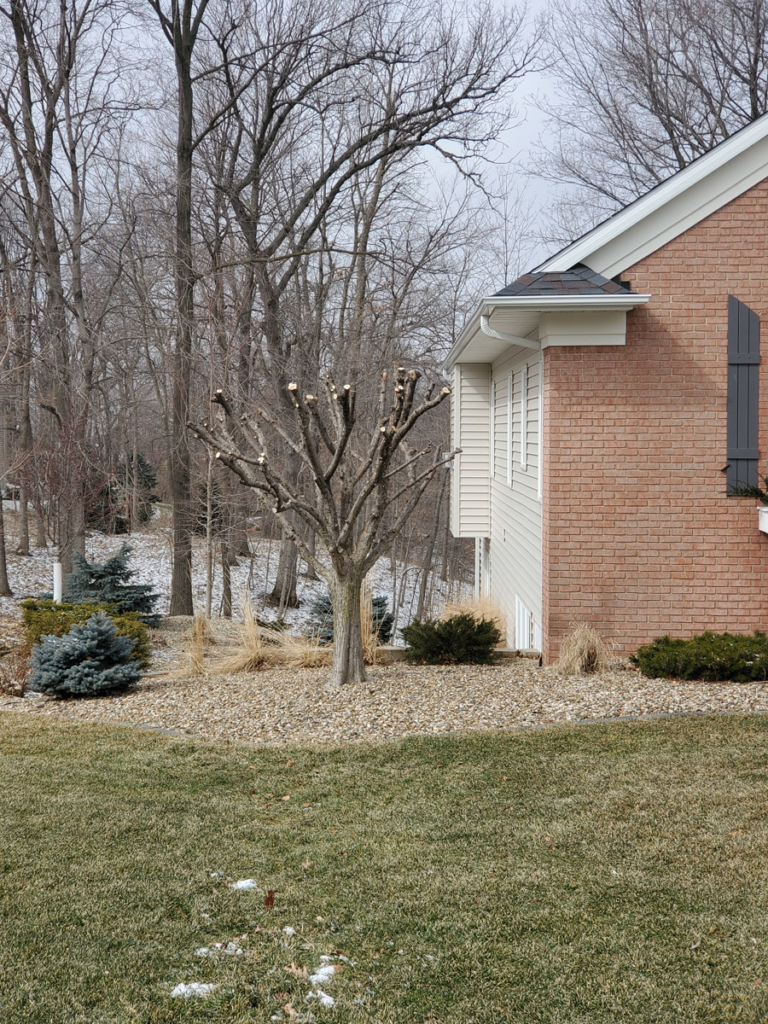
Tree topping involves cutting large branches back to stubs or removing substantial portions of a tree’s crown without making proper cuts to suitable lateral branches. Some homeowners believe this makes a tall tree safer by reducing its height and weight. Others assume it will prevent a tree from outgrowing its space. Unfortunately, topping can create the very problems homeowners are trying to avoid.
When a tree is topped, it loses a significant portion of its leaf-bearing crown. The tree may respond by producing numerous fast-growing shoots, often called water sprouts. These shoots can develop weak attachments and grow rapidly around the cut areas. As they mature, they may become vulnerable to breaking, particularly during strong winds or severe weather.
Topping also leaves large wounds that can be difficult for a tree to compartmentalize effectively. Over time, decay may develop around the damaged areas and compromise the tree’s structural integrity. Although topping may temporarily reduce a tree’s height, it does not necessarily make the tree safer or solve the underlying problem.
A better option may be crown reduction, a selective pruning technique that reduces a tree’s overall size while maintaining its natural structure. Proper reduction cuts are made back to suitable lateral branches, helping preserve the tree’s form and reducing unnecessary damage. The appropriate approach depends on the species, condition, and structure of the tree.
If a tree has grown too close to your home, roof, or power lines, do not assume that removing the top is the best solution. A professional assessment can help determine whether selective pruning, another management approach, or complete removal is appropriate. Trees near utility lines should be handled by qualified utility professionals rather than homeowners.
Myth: Wound Sealer Speeds Up Healing
For many years, tree care advice recommended covering pruning cuts with tar-based wound sealers or pruning paint. The idea was that sealing the wound would keep out insects and disease while helping the tree heal faster. Although the reasoning sounds sensible, routine wound sealing is generally not recommended.
Trees do not heal in the same way people do. When you cut your finger, new skin grows over the wound. When a tree loses a branch, it does not replace the missing tissue. Instead, it compartmentalizes the affected area and gradually grows new wood around the wound. Proper pruning helps the tree manage the damage and reduces the risk of additional problems.
Applying wound sealer to ordinary pruning cuts does not reliably prevent decay or speed wound closure. Some products may interfere with the tree’s natural responses. In most situations, a correctly positioned pruning cut made just outside the branch collar is preferable to covering the wound with a sealant.
There is an important exception for oak trees. Oak wilt can spread through fresh wounds during the growing season, so avoiding pruning during the higher-risk period is the primary preventive measure. If an oak must be pruned during spring or summer, Iowa State University Extension recommends applying latex house paint to the cuts immediately, within about 15 minutes, to help reduce the risk of disease transmission. This is a specific precaution for oak wilt, not a recommendation to routinely seal pruning wounds on other trees.
For most routine tree trimming in Cedar Rapids and Marion, leave pruning cuts untreated unless a qualified professional identifies a specific reason for treatment. Correct timing and proper cutting techniques are generally more important than applying a product to the wound.
Myth: More Trimming Equals More Growth
Some homeowners believe aggressive trimming will make a tree grow faster, fuller, or healthier. They may have seen how hedges respond to regular shearing and assume the same approach works for mature shade trees. This misconception can lead to over-pruning, which places unnecessary stress on trees and may weaken them over time.

Leaves play an essential role in a tree’s health. Through photosynthesis, they capture sunlight and produce the sugars the tree uses for growth, maintenance, and defense. Removing too much of the leafy crown reduces the tree’s ability to produce energy. The tree may then need to use stored reserves to support new growth and recover from the pruning.
Repeated heavy trimming can leave a tree more vulnerable to pests, disease, and environmental stress. Excessive pruning can also encourage rapid shoot growth, create structural problems, and interfere with the tree’s natural form.
Instead of focusing on how much growth trimming might encourage, consider what the tree actually needs. Pruning can remove dead or damaged branches, address structural issues, reduce specific hazards, and improve the tree’s form. The amount of live crown that should be removed depends on the species, age, health, and purpose of the work.
A common guideline is to avoid removing more than about one-quarter of a tree’s live crown in a single year, although appropriate limits vary. Mature trees and trees under stress may require a more conservative approach. A qualified arborist can determine how much pruning is suitable for the individual tree.
If your tree looks thin or is growing slowly, additional trimming may not solve the problem. Soil compaction, root damage, drought, pests, and disease can all affect growth. Identifying the underlying cause is the first step toward improving tree health. Removing more branches without understanding the problem could make the situation worse.
How to Spot Good Advice and Avoid Bad Cuts
With so much conflicting information about tree care, how can you determine which advice to trust? A few practical checks can help you distinguish sound recommendations from outdated or potentially harmful practices.
Be cautious of absolute rules. Trees differ by species, age, health, and growing conditions. Advice that claims every tree should always be trimmed the same way is probably oversimplified. Reliable recommendations explain why a particular technique or timing is appropriate for a specific situation.
Look for evidence-based information. University extension services, state forestry departments, and recognized arborist organizations provide useful guidance on pruning practices and tree health. Personal experience can be valuable, but it should be supported by current knowledge and an understanding of tree biology.
Watch for questionable pruning practices. Routine topping, indiscriminate removal of large portions of the crown, and unnecessary use of climbing spikes on living trees are warning signs. Climbing spikes can damage living bark and are generally inappropriate for routine pruning unless the tree is being removed or a specific situation justifies their use. A trustworthy tree care professional should explain the recommended work and answer your questions.
Ask about the reason for each cut. Before approving a pruning project, find out which branches need to be removed and why. The goal should be to address a specific concern, such as deadwood, structural defects, clearance, or a carefully planned reduction in size. Removing healthy branches without a clear purpose is not necessarily beneficial.
Consider the tree’s long-term health. Trees provide shade, support local wildlife, contribute to neighborhood character, and can add value to your property. Good tree care considers both immediate safety and the tree’s future structure and health.
At Sure Wood Tree Service, we are fully insured and committed to providing safe, responsible tree care for our neighbors in Cedar Rapids and Marion. For every tree we remove, we plant two more because we believe in leaving our community better than we found it.
Whether you have questions about trimming, concerns about a damaged branch, or simply want a second opinion on advice you have heard, our team can help you understand your options. Contact Sure Wood Tree Service for a free estimate and professional guidance on caring for the trees on your property.
Visit our website to learn more about our services, explore our tree pruning services, or find us on our Google Business Profile.
About Sure Wood Tree Service
Sure Wood Tree Service is a trusted tree care company serving Cedar Rapids, Marion, and communities throughout Eastern Iowa. Founded in 2020, the team provides professional tree removal, pruning, stump grinding, tree planting, and other tree care services with a strong focus on safety, sustainability, and environmental stewardship. With a commitment to the local community, Sure Wood works to protect properties while helping create a healthier, greener future.